Preparation Process for PPS Fiber Wet-laid Nonwovens
2026-04-16 17:30
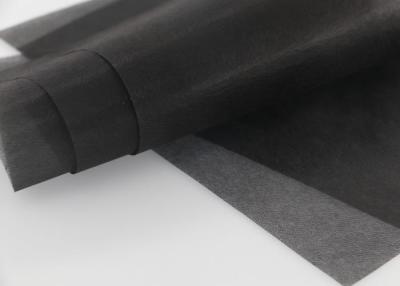
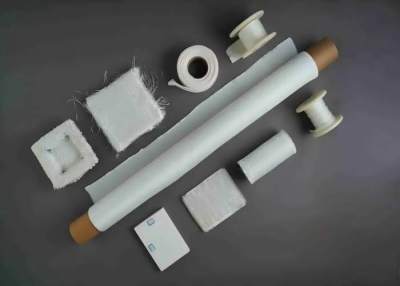
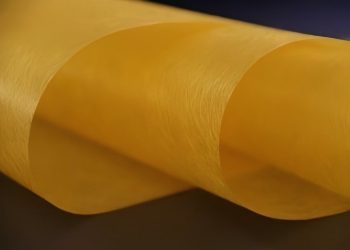
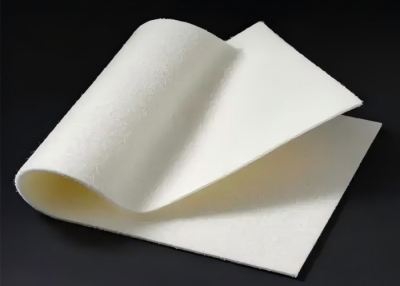
PPS fiber wet-laid nonwoven fabric is a high-performance nonwoven material produced using polyphenylene sulfide (PPS) fibers as raw material and employing wet-laid web-forming technology. This technology involves suspending fibers in an aqueous medium to form a slurry, which is then processed through stages such as dewatering, web formation, and bonding to create the final product; it combines the unique processing characteristics of wet-laid nonwovens with the exceptional properties inherent to PPS fibers.
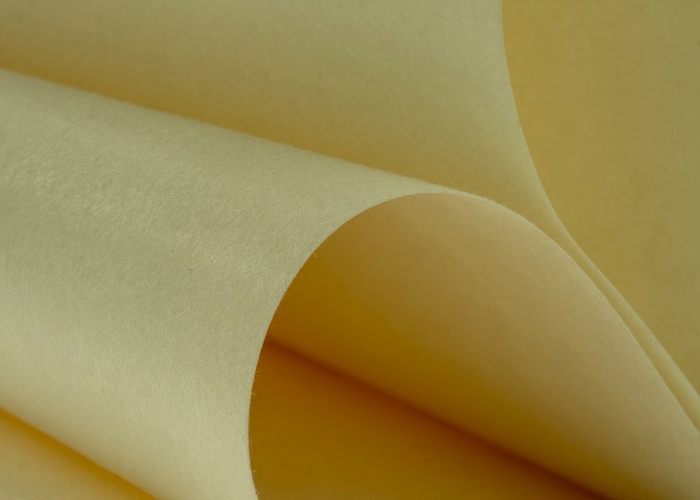
1. PPS fiber wet-laid nonwoven Process and Characteristics
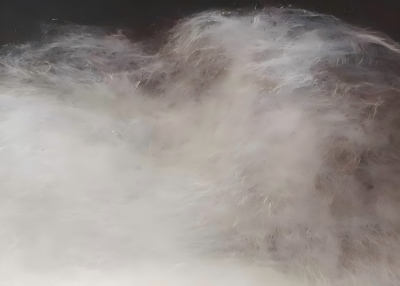
The core of the PPS fiber wet-laid nonwoven manufacturing process is wet-laid web formation, a production method that draws upon techniques utilized in the papermaking industry. The specific workflow involves the following steps: PPS staple fibers are opened and dispersed in water to create a uniform fiber slurry; the slurry is then conveyed to a forming wire section where it undergoes dewatering to form a wet fiber web; finally, the fiber web is bonded and consolidated using physical or chemical methods (such as thermal bonding or chemical bonding).
This process endows the resulting product with the following key characteristics:
High Web Uniformity: Since the fibers are randomly oriented within the aqueous medium, the resulting product exhibits an isotropic structure with excellent uniformity.
Suitability for Short Fibers:The process is particularly well-suited for processing short fibers—specifically those under 20 mm in length and PPS fibers can be cut to the appropriate length to be compatible with this technology.
High Production Speed:The wet-laid process features a high degree of automation and continuity, allowing for production speeds of up to 400 meters per minute, demonstrating outstanding efficiency.
Flexible Fiber Blending:The process allows for the thorough and uniform blending of different types and grades of fibers during the slurry preparation stage.
2. Performance Advantages of PPS Fiber Wet-laid Nonwoven
The inherent, exceptional properties of PPS fibers enable their wet-laid nonwoven products to perform outstandingly in demanding environments:
High Temperature Resistance:PPS fibers possess a long-term service temperature range of 190–220°C, making the resulting nonwoven products highly suitable for high-temperature filtration applications.
Chemical Corrosion Resistance:The material exhibits extremely strong resistance to acids, alkalis, organic solvents, and other chemical agents, demonstrating excellent chemical stability.
Flame Retardancy:The material is inherently flame-retardant, featuring a high Limiting Oxygen Index (LOI) that typically ranges between 34 and 35.
Dimensional Stability:It exhibits low thermal shrinkage and maintains excellent dimensional stability and mechanical strength even when exposed to high-temperature environments.
3. Key Application Areas
Based on the aforementioned processing techniques and performance characteristics, PPS fiber wet-laid nonwoven are primarily utilized in the following industrial sectors:
High Temperature Flue Gas Filtration: Serving as the core filter medium for baghouse dust collectors operating at high temperatures such as those found in coal-fired boilers, waste incinerators, and power plants these materials effectively capture dust while withstanding extreme heat and chemical corrosion.
Chemical liquid filtration: employed for the precision filtration of corrosive chemical liquids, including strong acids and strong bases.
Insulation Materials: Leveraging their exceptional heat resistance and electrical insulation properties, they serve as insulating liner materials for electric motors and transformers.
Composite Material Substrates: Used as reinforcing base fabrics for high-temperature-resistant and corrosion-resistant composite materials.
Related News
Read More >-
![Carbon fiber wet-laid nonwoven fabric]()
Carbon fiber wet-laid nonwoven fabric
-
![Quartz fiber sheathing: robust protection in extreme environments]()
Quartz fiber sheathing: robust protection in extreme environments
Quartz fiber sleeving uses high-purity silica as raw material, which can remain stable at a high temperature of 1700℃, and has excellent insulation, corrosion resistance and low expansion characteristics.
-
![Wet Process for Polyimide Fibers]()
Wet Process for Polyimide Fibers
Polyimide fiber is a very special fiber material. Its main steps involve dissolving the polyimide raw material in a solvent, and then spinning the dissolved polyimide liquid into fibers through a spinning process.
-
![Quartz Fiber Yarn: The "Special Forces" of the Materials World You Didn't Know About]()
Quartz Fiber Yarn: The "Special Forces" of the Materials World You Didn't Know About
Leveraging its characteristics—including high-temperature resistance up to 1700°C, exceptional insulation, and corrosion resistance—quartz fiber yarn has emerged as a critical material in the fields of 5G communications, semiconductors, and new energy, driving innovation across these industries.
-
![Discovering the Material of the Future—Quartz Fiber]()
Discovering the Material of the Future—Quartz Fiber
With a SiO₂ purity of ≥99.95%, quartz fiber elevates the long-term service temperature to 1050°C,withstanding instantaneous temperatures of up to 1700°C,thereby serving as a "fire blocking shield" for spacecraft.
-
![A New Type of Composite Material: Quartz Fiber]()
A New Type of Composite Material: Quartz Fiber
Owing to the exceptional dielectric, thermal, mechanical, and chemical properties of quartz fibers, they are widely utilized in aerospace, industrial, and civil projects.
-
![Polyimide Wet-laid Nonwoven Fabric—The Ideal Choice for High-Performance Materials]()
Polyimide Wet-laid Nonwoven Fabric—The Ideal Choice for High-Performance Materials
Polyimide non-woven fabric is a high-performance fibrous material manufactured using polyimide as the primary raw material via non-woven fabric technology. Produced using an advanced wet-laid process, it features exceptional high-temperature resistance, robust mechanical strength, and stable chemical properties.
-
![Aramid wet-laid nonwoven fabric]()
Aramid wet-laid nonwoven fabric
Aramid wet-laid nonwoven fabric is a high-performance nonwoven material made from aramid fibers using papermaking wet web forming technology. It has the advantages of high temperature resistance, high strength and uniformity of wet-laid process.