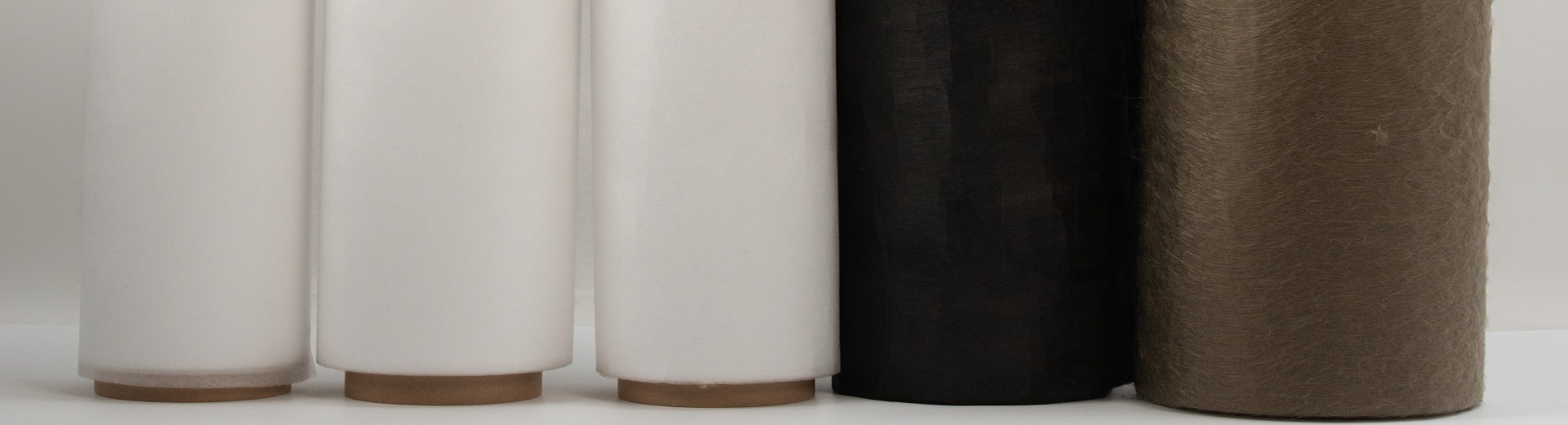
Quartz Filaments: The "Heat-Resistant, Wave-Transparent Barrier" for High-End Equipment
2026-04-20 16:49
Quartz fiber is manufactured using high-purity quartz sand (with a SiO₂ content of ≥99.95%) as its raw material, through processes involving melting, drawing, surface treatment, and composite molding.
It is a specialized inorganic fiber material characterized by a unique combination of properties: high-temperature resistance, low dielectric loss, superior electrical insulation, and excellent thermal shock resistance. Its continuous service temperature reaches up to 1200°C, with short-term peak temperature resistance exceeding 1600°C;
its dielectric constant remains stable at 3.7±0.1, its dielectric loss tangent (tanδ) is less than 0.001, and its coefficient of thermal expansion is as low as 0.5×10⁻⁶/°C. Consequently, it holds an irreplaceable status in the fields of extreme environments and high-end equipment.
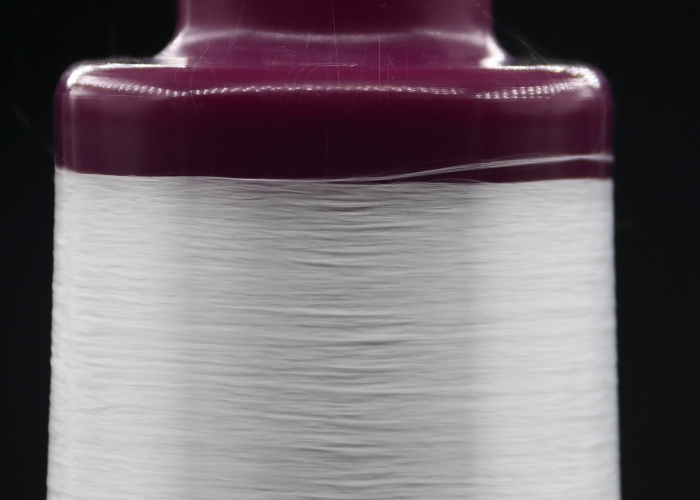
Quartz Fiber Manufacturing Process: Precise Control of Thermal Processing Stages
The production of quartz fibers involves six core stages: raw material purification, melt drawing, fiber pretreatment, surface modification, composite molding, and post-processing.
1. Quartz Fiber Raw Material Purification and Melt Drawing: Establishing a Solid Foundation for Performance
During the raw material purification stage, the content of impurities—such as Fe₂O₃ and Al₂O₃—within the quartz sand must be controlled to below 50 ppm to prevent these impurities from compromising the fiber's high-temperature resistance and electrical insulation properties.
The melt drawing process utilizes either the crucible method or the blow-spinning method; the purified quartz sand is melted into a liquid state within a high-temperature furnace exceeding 2000°C, then drawn at high speed through a spinneret (reaching drawing speeds of 1000–1500 m/min) to form continuous fiber bundles with diameters ranging from 3 to 15 μm.
2. Core Thermal Processing Steps for Quartz Fiber: Precise Temperature Control Determines Performance Limits
The fiber pretreatment stage centers on preheating, drying, and surface activation. This involves subjecting the fiber bundles to heat treatment within a temperature range of 280–350°C.
The objective is to remove adsorbed moisture from the fiber surface (reducing the moisture content to below 0.05%) while simultaneously enhancing the fiber's surface activity, thereby laying a solid foundation for subsequent surface modification and resin composite processing.
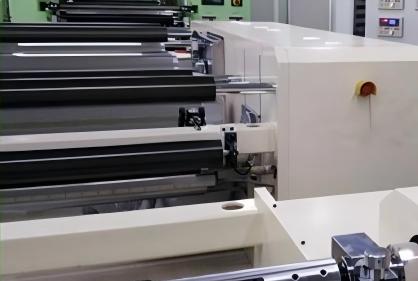
The composite molding stage is critical to the transformation of quartz fibers into high-end materials; depending on the specific application scenario, the quartz fibers must be composited with materials such as epoxy resins, polyimides, or ceramic matrices.
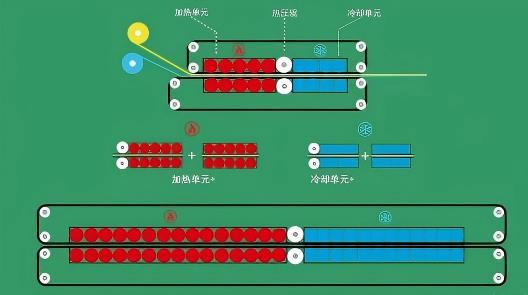
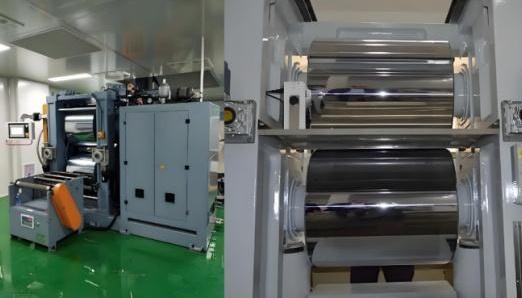
The post-processing stage primarily involves surface calendering and curing/setting. By utilizing specialized calenders and customized heating rollers, the surface flatness of the composite material is further enhanced (surface roughness Ra < 0.8 μm); simultaneously, precise curing control ensures the material's dimensional stability (dimensional deviation < 0.1%).
Core Application Domains of Quartz Fiber: Deep Penetration into High-End Sectors-Truly Irreplaceable
Leveraging its exceptional comprehensive performance, quartz fiber has deeply penetrated four core domains: aerospace, electronics and information technology, high-temperature industrial sectors, and medical and environmental protection.
It occupies an irreplaceable position within high-end equipment manufacturing and specialized application scenarios, while the continuous expansion of its application landscape simultaneously drives the iterative upgrading of its manufacturing processes.
Related News
Read More >-
![70g/m² Heavy-Duty Non-Woven Glass Mat for Architectural Acoustic Panels, Mineral Wool Tiles, and Perforated Ceilings]()
70g/m² Heavy-Duty Non-Woven Glass Mat for Architectural Acoustic Panels, Mineral Wool Tiles, and Perforated Ceilings
SAAT70 is a wet-laid non-woven fiberglass acoustic tissue engineered for high-performance sound absorption panels and architectural acoustic ceilings. We manufacture this dense fiberglass tissue as a primary acoustic facing veil that controls airflow resistance (AFR) while masking dark mineral wool and glass wool fibers.
-
![25g/m² Ultra-Thin Non-Woven Glass Mat for Substrate Reinforcement in PVC Flooring and Decorative Wallpapers]()
25g/m² Ultra-Thin Non-Woven Glass Mat for Substrate Reinforcement in PVC Flooring and Decorative Wallpapers
The light 25g/m² matrix holds exact machine tension under high-temperature PVC gelation ovens up to 200°C. Factory lines integrate SAFT25 into vinyl sheet flooring and vinyl-faced wall coverings to prevent edge curling, thermal shrinkage, and surface tearing during high-speed lamination
-
![25g/m² Ultra-Thin Glass Fiber Mat for Organic Waste Gas Adsorption and Air Purification Substrates]()
25g/m² Ultra-Thin Glass Fiber Mat for Organic Waste Gas Adsorption and Air Purification Substrates
The light 25g/m² matrix maintains uniform air permeability while providing high thermal resistance up to 260°C. Factory lines integrate SAFT25 into pleated filter elements, honeycomb adsorption wheels, and industrial exhaust gas scrubbers to optimize gas capture without driving up system pressure drop
-
![50g/m² Non-Woven Glass Mat for Primary Backing and Dimensional Stability in Modular Carpet Tiles]()
50g/m² Non-Woven Glass Mat for Primary Backing and Dimensional Stability in Modular Carpet Tiles
The 50g/m² matrix holds tight web tension during high-temperature PVC paste coating and hot bitumen impregnation up to 180°C. Factory lines integrate SACT50 directly between secondary backing layers to stabilize modular tile geometry and eliminate field returns caused by dimensional shifting
-
![50g/m² Functional Coated Mat for Polyisocyanurate (PIR/PUR), Rock Wool, and EPS Outer Wall Insulation Boards.]()
50g/m² Functional Coated Mat for Polyisocyanurate (PIR/PUR), Rock Wool, and EPS Outer Wall Insulation Boards.
The 50g/m² matrix features a functional polymer coating that blocks foam chemical strike-through, maintains web tension under continuous heat pressing up to 200°C, and ensures superior mortar keying on job sites.
-
![30g/m² Fiberglass Tissue for Inner and Outer Surface Treatment of FRP Products]()
30g/m² Fiberglass Tissue for Inner and Outer Surface Treatment of FRP Products
We produce this Fiberglass Surface Tissue to form a resin-rich layer on the inner corrosion-resistant lining and outer surface of FRP tanks, pipes, and pultruded profiles, preventing resin cracking under thermal stress.
-
![SART50 Fiberglass Roofing Tissue to Reduce Asphalt Membrane Production Scrap]()
SART50 Fiberglass Roofing Tissue to Reduce Asphalt Membrane Production Scrap
We make this Fiberglass Tissue to carry asphalt during continuous hot dipping and lamination runs.The 50g/m² matrix holds roll tension under high temperatures, stops edge tears, and controls binder loss in hot bitumen dip tanks up to 200°C.
-
![The Industrial Value of Polyimide Wet-Laid Nonwovens]()
The Industrial Value of Polyimide Wet-Laid Nonwovens
Polyimide fiber wet-laid nonwoven fabric is the ideal fiber material for making fire-retardant clothing such as protective suits for armored forces, racing suits, and flight suits. It can also be used to manufacture comfortable and warm functional clothing.