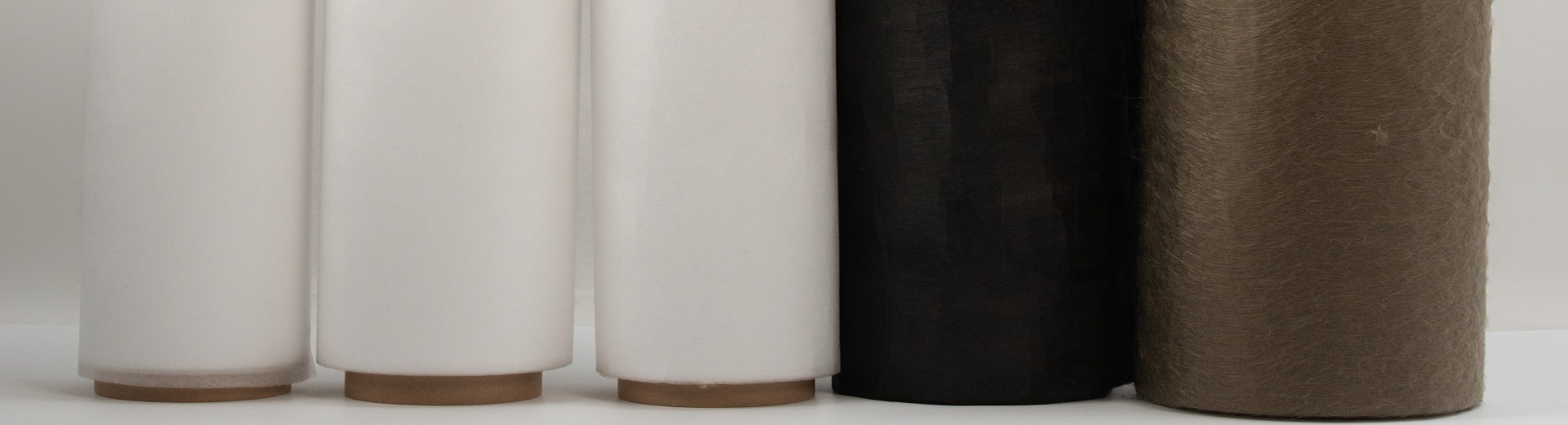
What makes quartz fiber needle-punched felt the new benchmark for thermal insulation materials?
2026-06-09 14:01
In high-temperature industrial sectors, the choice of thermal insulation materials directly impacts energy costs, equipment lifespan, and process stability.
In recent years, quartz fiber needle-punched felt has quietly emerged, rapidly replacing traditional insulation materials in high-end fields such as photovoltaics, semiconductors, and aerospace, and has been hailed by the industry as a "new benchmark for thermal insulation materials."
1. Quartz Fiber Temperature Limits: 1050°C for long-term use; higher temperatures tolerated for short periods.
The primary component of quartz fiber is silicon dioxide with a purity exceeding 99.95%, featuring an amorphous glassy structure.
It has a softening point as high as 1700°C, supports long-term operating temperatures of 1050°C–1200°C, and can withstand temperatures exceeding 1400°C for short durations.
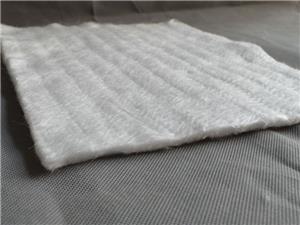
2. Thermal Insulation Efficiency—Low Thermal Conductivity
The thermal conductivity of quartz fiber needle-punched felt is as low as 0.03–0.05 W/(m·K) at room temperature and remains within 0.10–0.15 W/(m·K) at high temperatures (800°C).
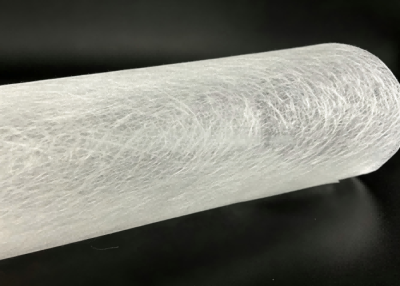
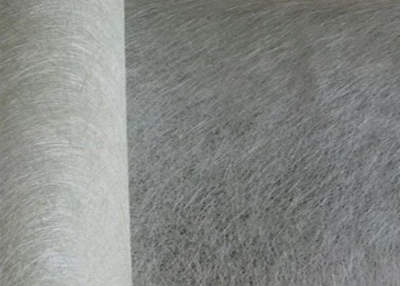
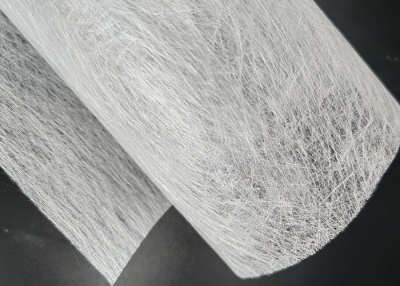
The core mechanism lies in the three-dimensional network structure created by the needle-punching process: with a porosity exceeding 90%, air is trapped within countless tiny, closed pores, significantly suppressing convective heat transfer.
Additionally, the quartz fibers—typically 4–9 μm in diameter with high aspect ratios—feature minimal contact points between fibers, resulting in a tortuous and lengthy path for solid-state heat conduction.
3. Flexibility and Mechanical Strength
Traditional thermal insulation materials often suffer from a trade-off where rigidity leads to brittleness, while softness leads to structural collapse.
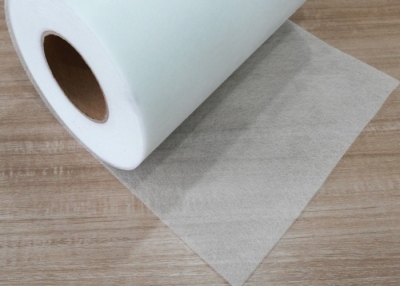
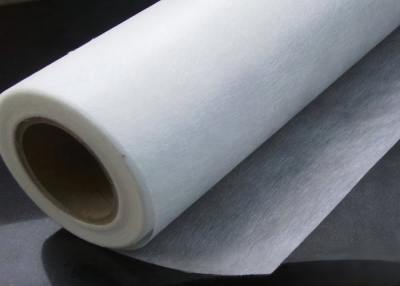
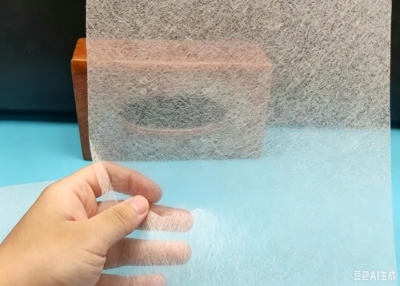
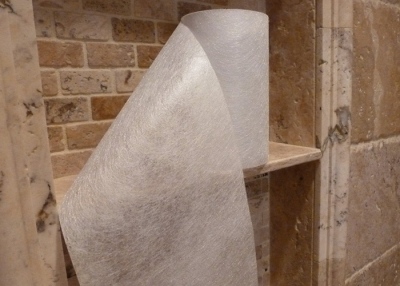
Quartz fiber needle-punched felt, however, achieves a balance of being flexible yet structurally stable, and tough yet not brittle. It can be rolled and folded like fabric, allowing it to conform to complex curved surfaces.
It offers a compressibility of 30%–50% and a rebound rate exceeding 90% after unloading, making it ideal for filling expansion joints and serving as sealing gaskets.
The needle-punching process interlocks the fibers into an integrated network, resulting in a tensile strength 3 to 5 times higher than that of standard non-woven felts.
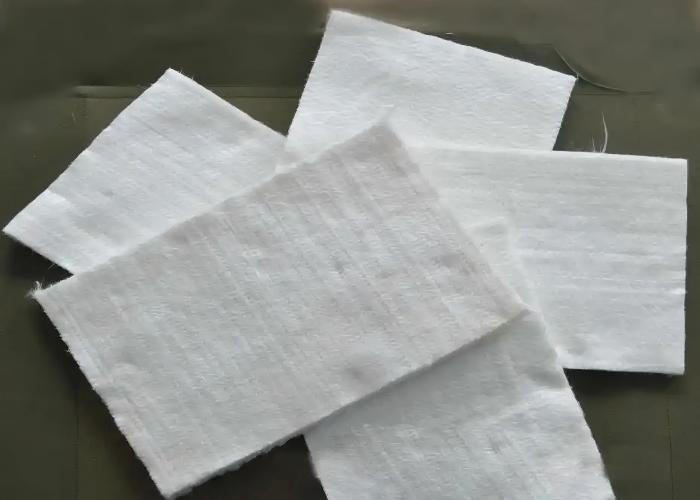
4. Purity and chemical stability - no pollution to the process environment
The SiO₂ content of quartz fiber is ≥99.95%, and the content of impurity elements (Fe, Cu, Na, K, etc.) is extremely low
Which means: It does not release free metal ions at high temperatures and will not pollute semiconductor wafers and optical components;
It is resistant to acid and alkali corrosion (except hydrofluoric acid and hot phosphoric acid), and is suitable for corrosive environments such as chemical industry and metallurgy;
It does not produce volatile organic compounds and meets the requirements for use in clean environments.
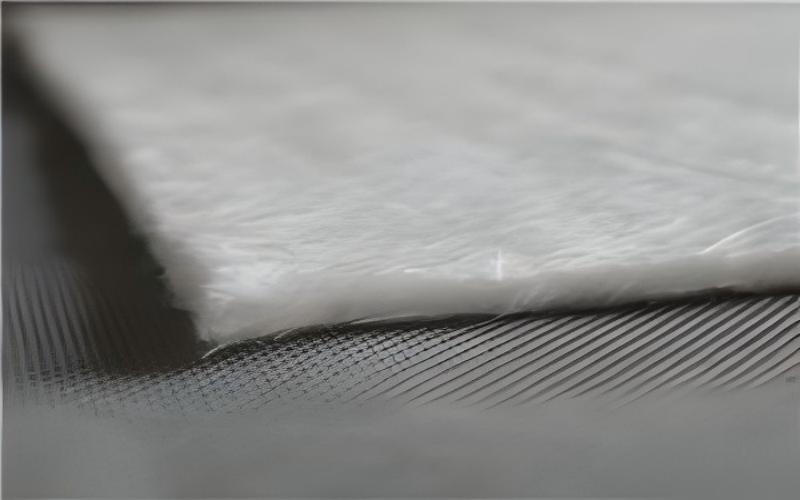
The rise of quartz fiber needle felt reflects a profound trend: high-temperature insulation materials are moving from "single performance orientation" to "comprehensive performance balance".
The thermal insulation materials of the future will not only compete with who is more "insulating", but also who is more "pure", who is more "durable" and who is more "multi-functional".
Quartz fiber needle felt has achieved the best balance point in the four core indicators of temperature resistance, heat insulation, flexibility and purity.
With the continued expansion of high-end manufacturing industries such as photovoltaics, semiconductors, and new energy, the application boundaries of quartz fiber needle felt are constantly expanding.
From a single insulation material, to a core component of thermal field solutions, to a prefabricated body of multifunctional composite materials, its role is increasingly diverse.
Related News
Read More >-
![70g/m² Heavy-Duty Non-Woven Glass Mat for Architectural Acoustic Panels, Mineral Wool Tiles, and Perforated Ceilings]()
70g/m² Heavy-Duty Non-Woven Glass Mat for Architectural Acoustic Panels, Mineral Wool Tiles, and Perforated Ceilings
SAAT70 is a wet-laid non-woven fiberglass acoustic tissue engineered for high-performance sound absorption panels and architectural acoustic ceilings. We manufacture this dense fiberglass tissue as a primary acoustic facing veil that controls airflow resistance (AFR) while masking dark mineral wool and glass wool fibers.
-
![25g/m² Ultra-Thin Non-Woven Glass Mat for Substrate Reinforcement in PVC Flooring and Decorative Wallpapers]()
25g/m² Ultra-Thin Non-Woven Glass Mat for Substrate Reinforcement in PVC Flooring and Decorative Wallpapers
The light 25g/m² matrix holds exact machine tension under high-temperature PVC gelation ovens up to 200°C. Factory lines integrate SAFT25 into vinyl sheet flooring and vinyl-faced wall coverings to prevent edge curling, thermal shrinkage, and surface tearing during high-speed lamination
-
![25g/m² Ultra-Thin Glass Fiber Mat for Organic Waste Gas Adsorption and Air Purification Substrates]()
25g/m² Ultra-Thin Glass Fiber Mat for Organic Waste Gas Adsorption and Air Purification Substrates
The light 25g/m² matrix maintains uniform air permeability while providing high thermal resistance up to 260°C. Factory lines integrate SAFT25 into pleated filter elements, honeycomb adsorption wheels, and industrial exhaust gas scrubbers to optimize gas capture without driving up system pressure drop
-
![50g/m² Non-Woven Glass Mat for Primary Backing and Dimensional Stability in Modular Carpet Tiles]()
50g/m² Non-Woven Glass Mat for Primary Backing and Dimensional Stability in Modular Carpet Tiles
The 50g/m² matrix holds tight web tension during high-temperature PVC paste coating and hot bitumen impregnation up to 180°C. Factory lines integrate SACT50 directly between secondary backing layers to stabilize modular tile geometry and eliminate field returns caused by dimensional shifting
-
![50g/m² Functional Coated Mat for Polyisocyanurate (PIR/PUR), Rock Wool, and EPS Outer Wall Insulation Boards.]()
50g/m² Functional Coated Mat for Polyisocyanurate (PIR/PUR), Rock Wool, and EPS Outer Wall Insulation Boards.
The 50g/m² matrix features a functional polymer coating that blocks foam chemical strike-through, maintains web tension under continuous heat pressing up to 200°C, and ensures superior mortar keying on job sites.
-
![30g/m² Fiberglass Tissue for Inner and Outer Surface Treatment of FRP Products]()
30g/m² Fiberglass Tissue for Inner and Outer Surface Treatment of FRP Products
We produce this Fiberglass Surface Tissue to form a resin-rich layer on the inner corrosion-resistant lining and outer surface of FRP tanks, pipes, and pultruded profiles, preventing resin cracking under thermal stress.
-
![SART50 Fiberglass Roofing Tissue to Reduce Asphalt Membrane Production Scrap]()
SART50 Fiberglass Roofing Tissue to Reduce Asphalt Membrane Production Scrap
We make this Fiberglass Tissue to carry asphalt during continuous hot dipping and lamination runs.The 50g/m² matrix holds roll tension under high temperatures, stops edge tears, and controls binder loss in hot bitumen dip tanks up to 200°C.
-
![The Industrial Value of Polyimide Wet-Laid Nonwovens]()
The Industrial Value of Polyimide Wet-Laid Nonwovens
Polyimide fiber wet-laid nonwoven fabric is the ideal fiber material for making fire-retardant clothing such as protective suits for armored forces, racing suits, and flight suits. It can also be used to manufacture comfortable and warm functional clothing.