


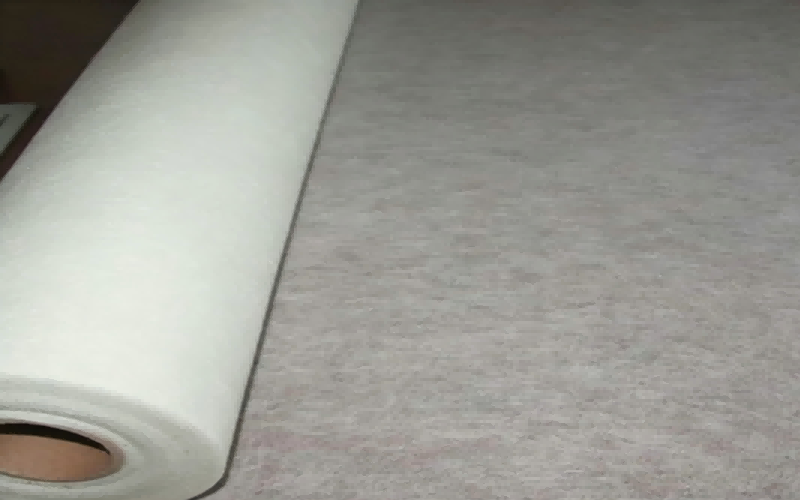
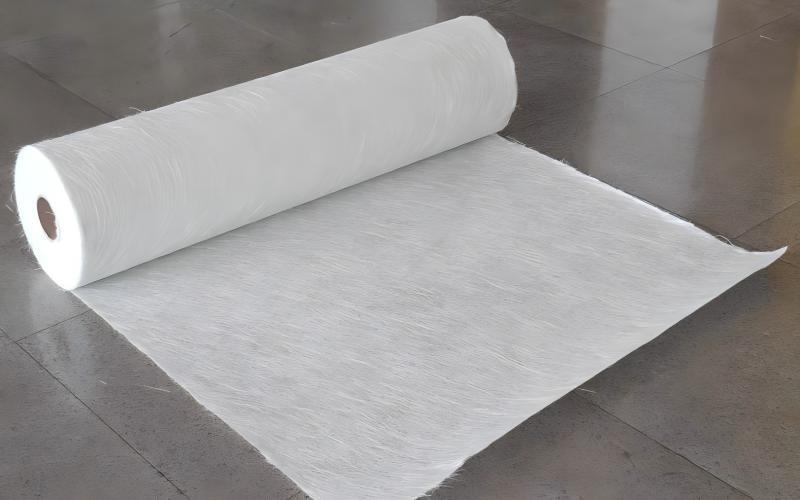
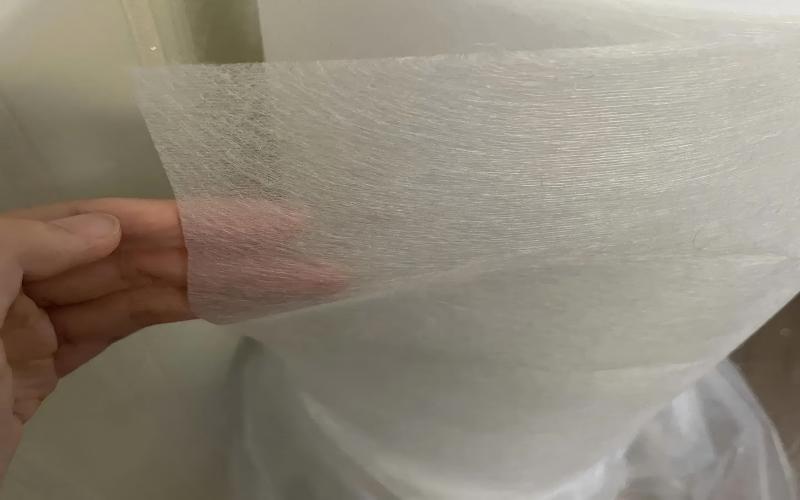
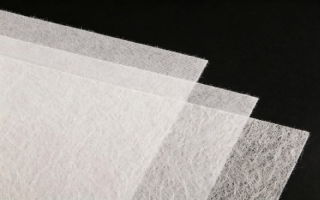
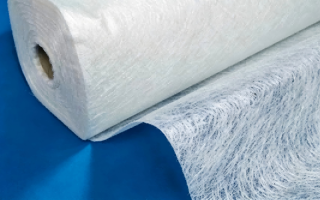
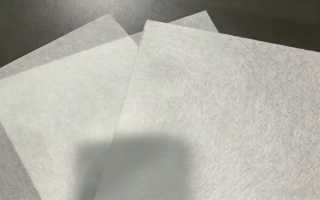
SAST40 Fiberglass Roofing Tissue (40 g/m²)
The 40 g/m² fiberglass mat is specifically designed for SBS and APP modified bitumen production processes; it ensures smooth material penetration at standard operating temperatures while preventing damage to the product structure.
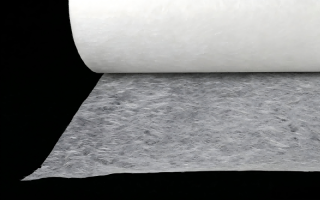
SAST40 Fiberglass Roofing Tissue (40 g/m²)
Steady dimensional stability and rapid bitumen wet-out engineered for continuous, high-speed asphalt membrane production.
SAXOBRAN® We developed the SART40 after working closely with plant technical directors who struggled with frequent web breaks during peak summer production shifts. This 40 g/m² fiberglass mat is bound by a highly compatible, modified cross-linked resin, ensuring exceptional thickness uniformity and controlled porosity across the entire roll. Designed specifically for SBS and APP modified bitumen lines, it allows your formulation to penetrate smoothly at standard operating temperatures without structural distorting. By focusing on uniform fiber distribution rather than excessive binder weight, we help your workshop achieve predictable raw material consumption and clean, consistent line yields.
Industrial Pain Points Solved
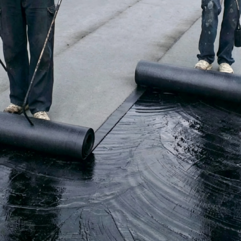
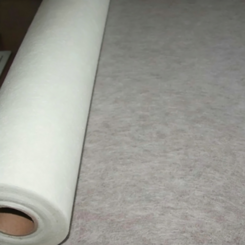
High-Speed Tensile Web Snapping at Elevated Temperatures
When running modified bitumen at temperatures exceeding 170°C under high mechanical line tension, standard lightweight carrier mats often lose their structural integrity. A single weak point or localized thinning causes an immediate web break. This results in messy bitumen spillages, hours of expensive downtime for cleaning, and significant scrap costs.
SART40 utilizes high-integrity filament glass fibers distributed via a precise wet-laid process. We engineered the chemical binder to maintain its tensile strength under thermal loads, allowing the mat to withstand continuous pulling forces through the saturation bath without necking, tearing, or snapping.
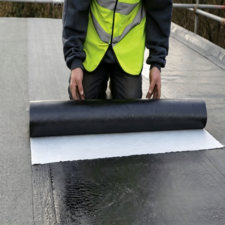
Bitumen Delamination and Surface Blistering
If a fiberglass tissue possesses an uneven binder distribution or an overly dense pore structure, the heavy bitumen formulation cannot fully impregnate the carrier mat. This leaves trapped air and microscopic moisture pockets inside the core. Months later, these pockets expand under atmospheric heat, causing surface blistering in the field or catastrophic layer delamination.
We strictly control the air permeability and porosity of the SART40 matrix during manufacturing. The binder chemistry is explicitly optimized to interface with hot SBS/APP asphalt matrices, facilitating instantaneous wet-out that eliminates dry spots and internal micro-voids.
Engineered Characteristics
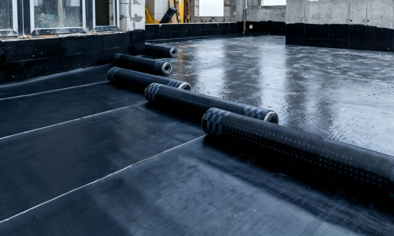
Uniform Surface Matting & Structural Masking
The random glass fiber layout is calibrated to mask underlying substrate irregularities while providing a flat, uniform face. This ensures that the applied bitumen coating maintains an identical thickness across the entire width of the membrane.
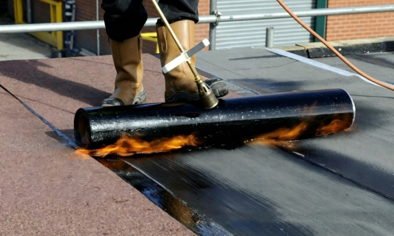
Rapid Bitumen Matrix Affinity
Our binder formulation avoids generic chemical blockages, offering a high affinity for both elastomeric and plastomeric modified bitumens. This speeds up deep matrix impregnation even when your line is running at elevated mechanical speeds.
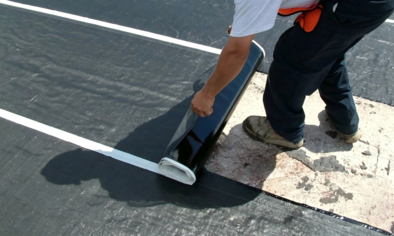
Reliable Mechanical and Dimensional Stability
SART40 resists shrinking, curling, or stretching when subjected to mechanical tension and intense thermal transitions. Your production crew won't have to constantly fight edge warping during the critical cooling and winding phases.
Technical Data Sheet
| Technical Parameter | Standard Value | Testing Basis | Engineering Purpose |
| Area Weight | 40 ± 3 g/m² | ISO 3374 | Guarantees uniform material consumption and predictable asphalt absorption |
| Tensile Strength (MD) | ≥ 160 N/50mm | EN 12311-1 / ISO 5081 | Withstands continuous inline pulling tension during high-speed unwinding |
| Tensile Strength (CD) | ≥ 60 N/50mm | EN 12311-1 / ISO 5081 | Prevents edge splitting and tearing during transverse tracking adjustments |
| Binder Content(LOI) | ≤25% | ISO 1887 | Balances mechanical fiber binding with the necessary porosity for deep wet-out |
| Moisture Content | ≤1.0% | ISO 3344 | Prevents instant steam vaporization and blistering when entering hot bitumen |
Processing, Packaging & Logistics Quality
1
Temperature Range
The temperature must be strictly controlled between 5°C and 35°C to prevent the organic binder from aging or decomposing.
2
Storage Method
Storage may be horizontal or vertical; however, the goods must be kept in a dry, enclosed warehouse environment.
3
Stacking Security
Do not stack pallets more than 2 layers high to eliminate the risk of crushing the internal structural cores.
Global Supply Chain Securement
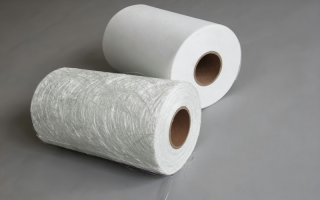
Roll & Core Construction: Each SART40 roll is wound tightly around a heavy-duty, 3-inch (76mm) reinforced cardboard core to prevent center collapsing.
Sealed Barrier Packaging: Rolls are individually sealed in heavy-gauge PE moisture-barrier film and securely strapped on fumigated wooden pallets.
Anti-Shifting Loading: For ocean freight transit, we utilize internal container airbags to completely eliminate shifting and edge impact damage.
Technical Q&A
Q: How does SART40 differ from generic 40 g/m² fiberglass tissues available on the open market?
A: Many low-cost tissues rely on standard domestic binders that soften prematurely around 140°C, causing the mat to stretch or narrow under production tension. SART40 utilizes an advanced, high-softening-point binder formulation that holds the glass fibers rigidly in place until the hot bitumen fully encapsulates them, preserving your targeted roll width.
Q: What line adjustments do you recommend to maximize the performance of this mat?
A: We generally recommend keeping the initial bitumen contact zone between 165°C and 175°C. If your technical crew notices minor surface rippling, it is usually fixed by slightly decreasing the unwinding brake tension rather than raising the temperature; the high porosity of SART40 allows complete wet-out without requiring excess thermal thinning.
Q: What is the behavior of the material if a roll is left unsealed in the workshop overnight?
A: While glass fiber itself does not absorb water, high ambient workshop humidity can cause surface moisture to settle on the binder matrix. If left exposed to humidity over 80% for extended periods, this surface moisture may cause micro-foaming when introduced to hot asphalt. We always recommend resealing partial rolls in their original PE wrap if the line is down for more than 4 hours.