25g/m² Ultra-Thin Glass Fiber Mat for Organic Waste Gas Adsorption and Air Purification Substrates
2026-09-29 15:05
1. Technical Overview
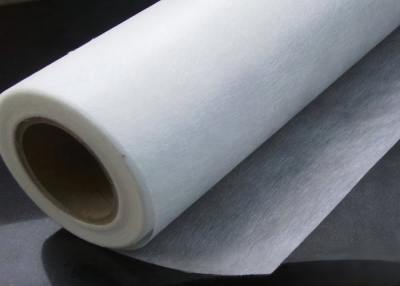
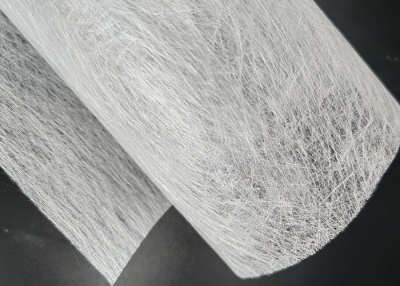
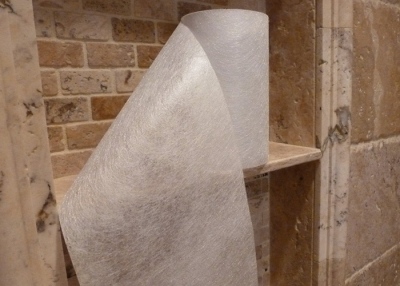
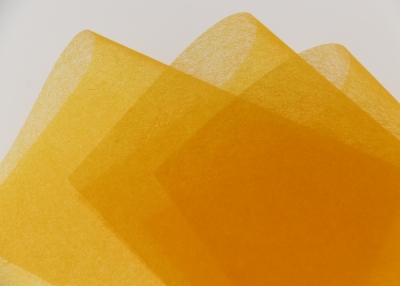
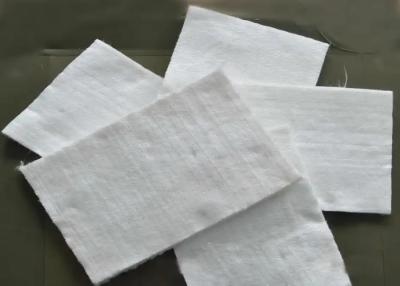
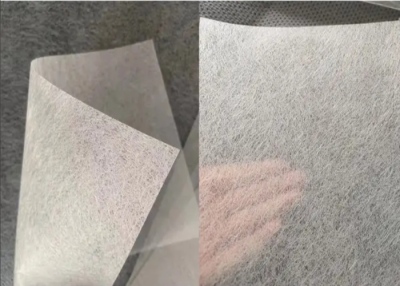
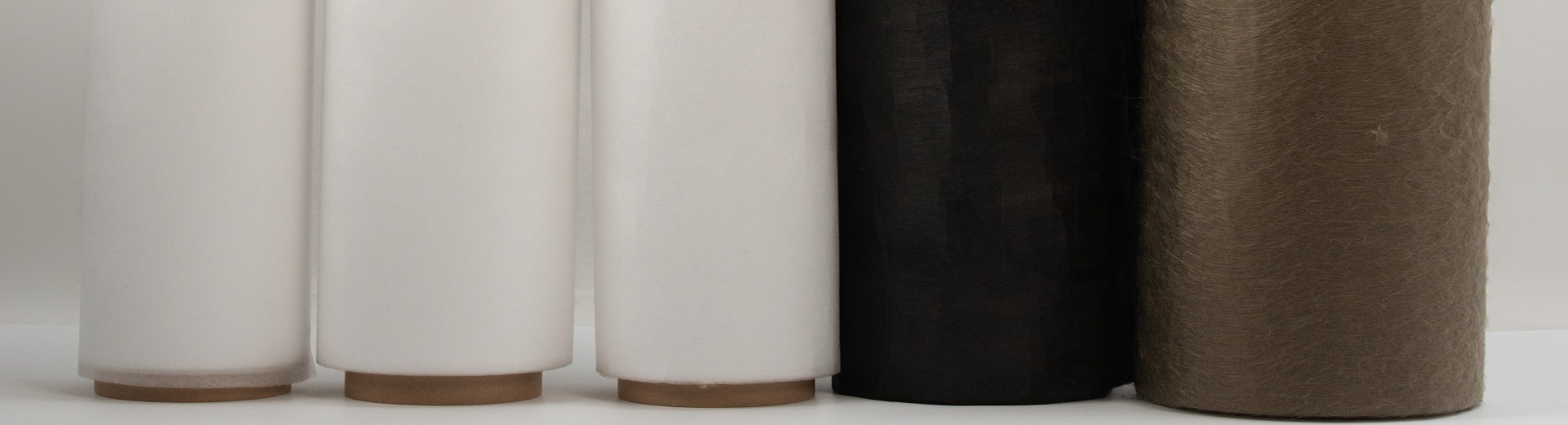
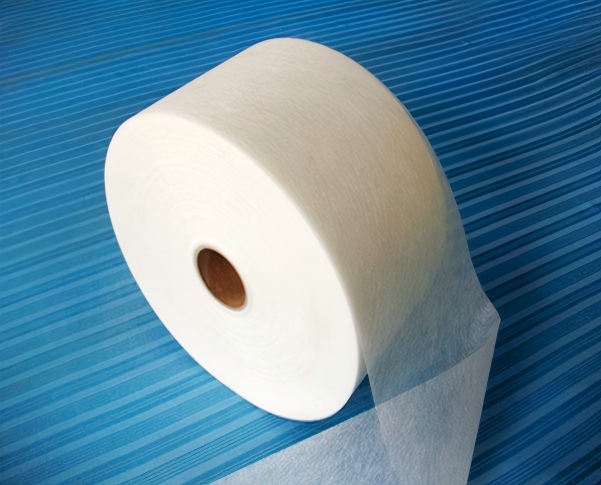
SAFT25 is a wet-laid non-woven fiberglass filter tissue engineered for high-efficiency gas purification and air filtration equipment.
We manufacture this ultra-thin fiberglass tissue to serve as a high-porosity substrate carrying activated carbon, catalyst coatings, and organic waste gas (VOC) adsorption layers.
The light 25g/m² matrix maintains uniform air permeability while providing high thermal resistance up to 260°C.
Factory lines integrate SAFT25 into pleated filter elements, honeycomb adsorption wheels, and industrial exhaust gas scrubbers to optimize gas capture without driving up system pressure drop.
2. Technical Specifications Table (TDS)
| Technical Parameter | Metric Value | Test Standard | Workshop Function & Purpose |
| Unit Weight (Grammage) | 25 g/m² (±5%) | ISO 3374 | Controls exact fiberglass tissue weight to maintain uniform gas permeability |
| Nominal Thickness | 0.25 mm | ISO 534 | Ultra-thin profile allows tight pleating density without choking air velocity |
| Loss on Ignition (LOI) | 10% | ISO 1887 | Maintains binder stability in high-temperature VOC thermal desorption cycles |
| MD Tensile Strength | ≥ 80 N/50mm | ISO 3342 | Prevents web tearing under inline coating tension and automatic pleating machinery |
| Moisture Content | ≤ 1.0% | ISO 3344 | Prevents steam blistering and coating delamination during resin curing ovens |
3. Key Features & Workshop Problem Solvers
Low Air Pressure Drop Across Filter Elements
Dense filtration media increases blower energy consumption and limits airflow in gas scrubbers.
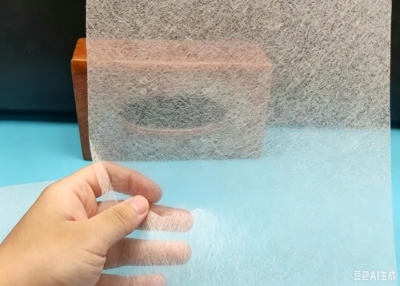
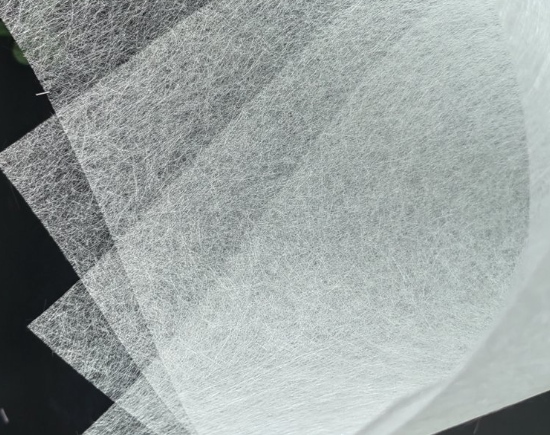
SAFT25 fiberglass filter tissue features a highly porous wet-laid fiber structure.
The 25g/m² matrix allows high-velocity gas throughput while providing a stable, uniform surface to hold activated carbon slurries and catalyst coatings.
Zero Web Tear During Continuous High-Speed Pleating
Thin filter papers tear easily under high tension during automated filter pleating and slitting.
SAFT25 fiberglass tissue delivers machine-direction tensile strength of ≥ 35 N/50mm despite its ultra-light weight.
This pull strength eliminates web snaps on continuous converting lines and holds crisp pleat geometry.
High Temperature Resistance for VOC Thermal Desorption
Polymer-based filter media degrade or melt during thermal regeneration of organic waste gas (VOC) adsorption beds.
SAFT25 uses an inorganic glass fiber matrix that withstands continuous operating temperatures up to 260°C.
It stays dimensionally stable during hot air purge cycles without shrinking or losing binder integrity.
4. Target Applications & Processing Lines
Organic Waste Gas (VOC) & Activated Carbon Substrates
Filter element manufacturers use SAFT25 fiberglass filter tissue as the primary carrier web for activated carbon impregnation and slurry dipping.
The fiberglass tissue holds fine carbon particles evenly on both sides, making it ideal for VOC adsorption units, industrial exhaust purifiers, and solvent recovery systems.
High-Temperature Industrial Air Purification
SAFT25 functions as a protective surface veil and pre-filter layer in industrial air purification equipment.
The fiberglass filter tissue protects delicate HEPA glass paper cores from mechanical abrasion, traps coarse oil mist/dust, and extends the overall service life of heavy-duty air filter banks.
5: Frequently Asked Questions (Technical FAQ)
Q: Can SAFT25 fiberglass filter tissue withstand liquid catalyst and carbon slurry dipping?
A: Yes. SAFT25 uses a chemical-resistant thermosetting binder that retains web integrity in aqueous and solvent-based coating baths. The fiberglass filter tissue maintains its structure without sagging or tearing during slurry dip-coating and drying oven passes.
Q: How does SAFT25 improve filter pleating output on automatic machines?
A: SAFT25 provides consistent thickness (0.22mm) and high machine-direction pull strength (≥ 35 N/50mm). This uniformity prevents edge crushing, micro-cracking, and web jamming when passing through high-speed mechanical pleating rollers.
Q: What is the maximum continuous working temperature for SAFT25?
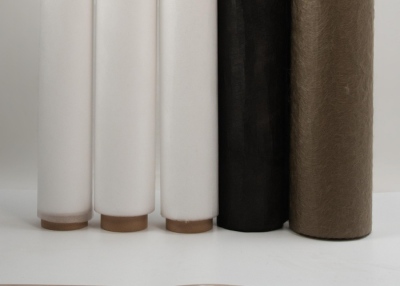
A: SAFT25 fiberglass tissue operates continuously at temperatures up to 260°C. The inorganic glass fibers will not burn, stretch, or emit volatile organics during high-temperature exhaust purification or VOC thermal desorption runs. Keep unused rolls sealed in PE film to prevent moisture contamination.
Related News
Read More >-
![50g/m² Non-Woven Glass Mat for Primary Backing and Dimensional Stability in Modular Carpet Tiles]()
50g/m² Non-Woven Glass Mat for Primary Backing and Dimensional Stability in Modular Carpet Tiles
The 50g/m² matrix holds tight web tension during high-temperature PVC paste coating and hot bitumen impregnation up to 180°C. Factory lines integrate SACT50 directly between secondary backing layers to stabilize modular tile geometry and eliminate field returns caused by dimensional shifting
-
![50g/m² Functional Coated Mat for Polyisocyanurate (PIR/PUR), Rock Wool, and EPS Outer Wall Insulation Boards.]()
50g/m² Functional Coated Mat for Polyisocyanurate (PIR/PUR), Rock Wool, and EPS Outer Wall Insulation Boards.
The 50g/m² matrix features a functional polymer coating that blocks foam chemical strike-through, maintains web tension under continuous heat pressing up to 200°C, and ensures superior mortar keying on job sites.
-
![30g/m² Fiberglass Tissue for Inner and Outer Surface Treatment of FRP Products]()
30g/m² Fiberglass Tissue for Inner and Outer Surface Treatment of FRP Products
We produce this Fiberglass Surface Tissue to form a resin-rich layer on the inner corrosion-resistant lining and outer surface of FRP tanks, pipes, and pultruded profiles, preventing resin cracking under thermal stress.
-
![SART50 Fiberglass Roofing Tissue to Reduce Asphalt Membrane Production Scrap]()
SART50 Fiberglass Roofing Tissue to Reduce Asphalt Membrane Production Scrap
We make this Fiberglass Tissue to carry asphalt during continuous hot dipping and lamination runs.The 50g/m² matrix holds roll tension under high temperatures, stops edge tears, and controls binder loss in hot bitumen dip tanks up to 200°C.
-
![The Industrial Value of Polyimide Wet-Laid Nonwovens]()
The Industrial Value of Polyimide Wet-Laid Nonwovens
Polyimide fiber wet-laid nonwoven fabric is the ideal fiber material for making fire-retardant clothing such as protective suits for armored forces, racing suits, and flight suits. It can also be used to manufacture comfortable and warm functional clothing.
-
![Wet-laid nonwovens are rapidly penetrating the high-end application market, driven by their superior performance.]()
Wet-laid nonwovens are rapidly penetrating the high-end application market, driven by their superior performance.
-
![What makes quartz fiber needle-punched felt the new benchmark for thermal insulation materials?]()
What makes quartz fiber needle-punched felt the new benchmark for thermal insulation materials?
With a temperature resistance limit of 1050°C, an ultra-low thermal conductivity of 0.03 W/(m·K), 30% compressibility and resilience, and 99.95% purity, quartz fiber needle-punched felt is sparking a thermal insulation revolution in the photovoltaic and semiconductor sectors.
-
![High-Performance Quartz Fiber Wet-Laid Nonwovens for Extreme Environments]()
High-Performance Quartz Fiber Wet-Laid Nonwovens for Extreme Environments
Quartzel fiber is a homogeneous, non-porous, continuous, and amorphous ultra-high-purity silica glass. An SiO₂ content of no less than 99.95% ensures the material's exceptional purity and chemical stability. Wet-laid Quartz Fiber Nonwoven manufactured from high-purity yarns that have been cut and subsequently processed via a wet-laid process.