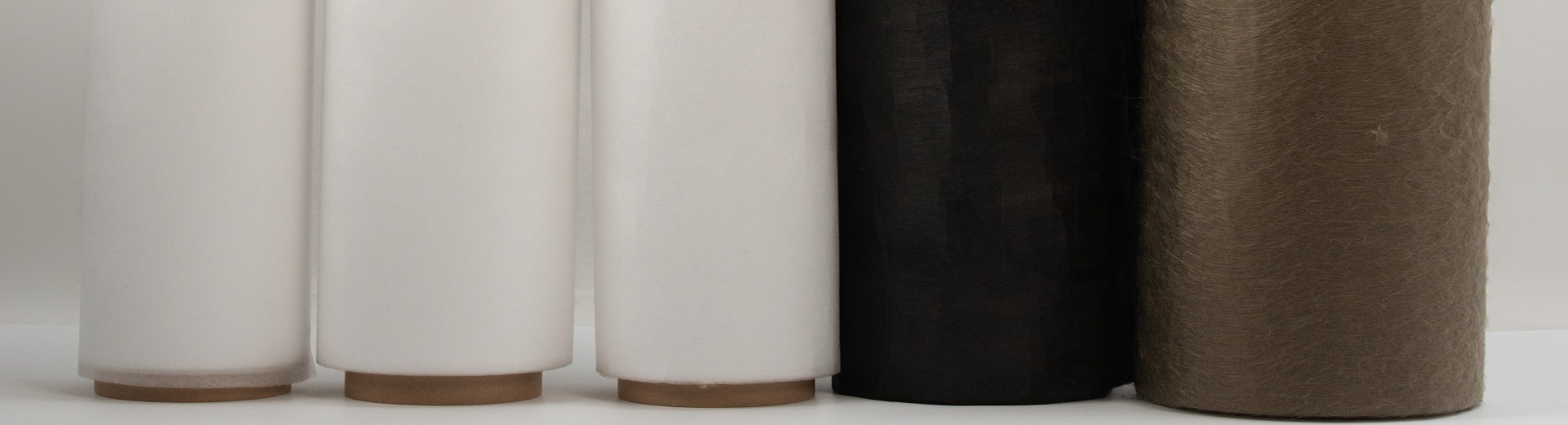
SART50 Fiberglass Roofing Tissue to Reduce Asphalt Membrane Production Scrap
2026-09-03 11:41
1. Technical Overview
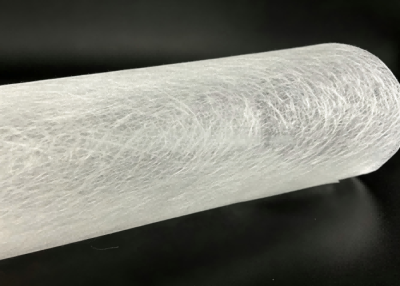
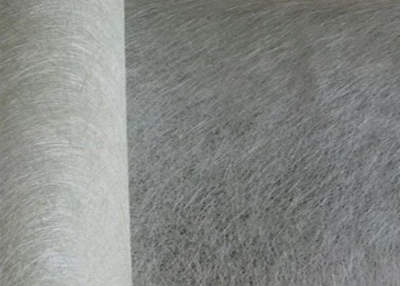
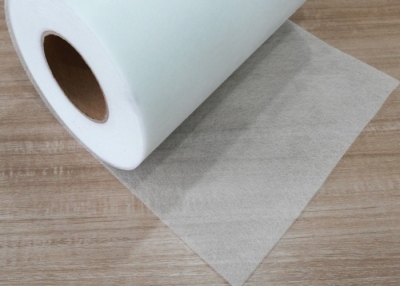
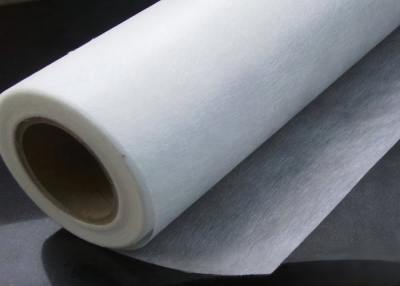
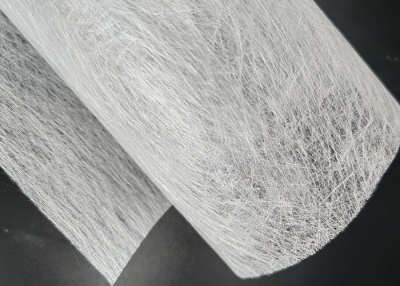
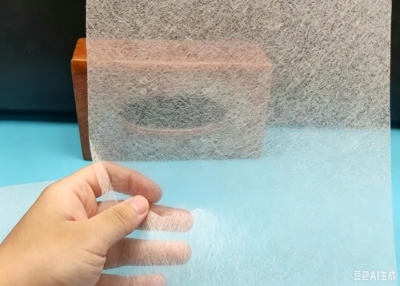
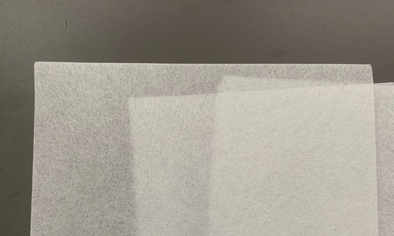
SART50 is a wet-laid non-woven Fiberglass Roofing Tissue designed for heavy continuous production.
We make this Fiberglass Tissue to carry asphalt during continuous hot-dipping and lamination runs.
The 50g/m² matrix holds roll tension under high temperatures, stops edge tears, and controls binder loss in hot bitumen dip tanks up to 200°C.
Factory lines use SART50 as the primary carrier web for Asphalt Roofing Shingles and SBS/APP waterproofing rolls.
2. Technical Specifications Table (TDS)
| Technical Parameter | Metric Value | Test Standard | Workshop Function & Purpose |
| Unit Weight (Grammage) | 50 g/m² (±5%) | ISO 3374 | Controls exact Fiberglass Tissue weight to hold uniform asphalt pickup |
| Loss on Ignition (LOI) | 25% | ISO 1887 | Holds fiber matrix integrity in hot bitumen tanks up to 200°C |
| MD Tensile Strength | ≥ 170 N/50mm | ISO 3342 | Prevents web snaps under high line pull on continuous shingle lines |
| CD Tensile Strength | ≥ 80 N/50mm | ISO 3342 | Stops edge tears during high-speed roll winding and cooling |
| Moisture Content | ≤ 1.0% | ISO 3344 | Stops steam bubbles and pinholes during hot asphalt impregnation |
3. Key Features & Workshop Problem Solvers
No Web Snaps at High Bath Temperatures
Thin carrier veils stretch when pulled through hot asphalt dip tanks at 200°C. SART50 Fiberglass Roofing Tissue maintains machine-direction tensile strength (≥ 170 N/50mm).
This high pull strength stops web snaps, prevents line stoppages, and keeps continuous machines running.
Rapid Bitumen Wet-Out
Tight binder layers slow down asphalt saturation on high-speed lines. SART50 Fiberglass Tissue uses a fast-dissolving binder system.
The glass matrix lets hot bitumen fill all internal voids in under 5 seconds, stopping air traps that cause surface blistering in finished shingle products.
Controls Dimensional Shift Under Heat
Low-grade tissue shrinks or curls when moving from hot asphalt dips to cooling rollers. SART50 holds thermal expansion under 0.1% at 200°C.
This dimensional stability prevents edge curling, stops roll telescoping, and keeps shingle cut dimensions within strict factory tolerances.
4. Target Applications & Processing Lines
Asphalt Roofing Shingles
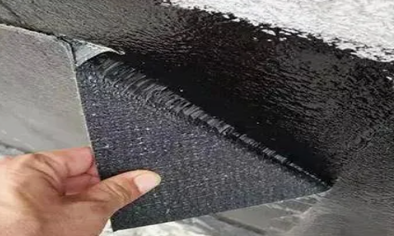
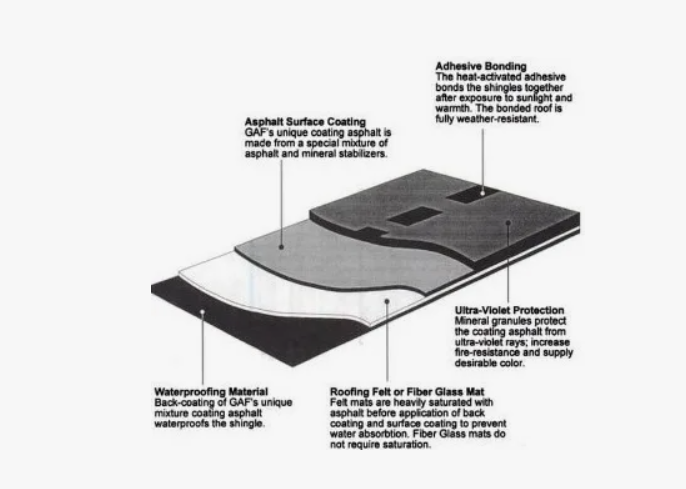
SART50 Fiberglass Roofing Tissue acts as the core reinforcement mat inside multi-layer asphalt shingles.
Line operators feed the Fiberglass Tissue web into hot asphalt compound vats, followed by granule application and mechanical die-cutting.
The tissue locks structural dimensions to prevent shingles from warping under outdoor heat cycles.
Modified Bitumen Waterproofing Membranes (SBS / APP)
Plant engineers use SART50 as the carrier layer for torch-on SBS and APP bitumen rolls.
The Fiberglass Roofing Tissue absorbs modified asphalt evenly on both sides. This consistent wet-out prevents pinholes and creates a watertight seal across flat commercial roofs and basement tanking structures.
5. Frequently Asked Questions (Technical FAQ)
Q: How does SART50 Fiberglass Roofing Tissue stop line breaks on high-speed shingle lines?
A: SART50 uses high-tensile glass fibers aligned in the machine direction. This design gives the Fiberglass Tissue a pull strength of ≥ 140 N/50mm. It holds inline machine tension without stretching or splitting when moving through hot bitumen dip tanks.
Q: What is the maximum recommended bitumen tank temperature for SART50?
A: SART50 Fiberglass Roofing Tissue works in bitumen dip tanks up to 200°C. The binder content (18.0% - 22.0% LOI) stays stable under heat to stop web softening and roll curling.
Q: How long can an opened roll of SART50 stay on the shop floor before processing?
A: Use opened SART50 Fiberglass Tissue rolls within 24 hours. If room humidity is high, the glass matrix absorbs moisture above 0.2%. High moisture causes steam pockets and pinholes when the veil hits hot asphalt vats. Seal unused rolls back in PE film.
Related News
Read More >-
![70g/m² Heavy-Duty Non-Woven Glass Mat for Architectural Acoustic Panels, Mineral Wool Tiles, and Perforated Ceilings]()
70g/m² Heavy-Duty Non-Woven Glass Mat for Architectural Acoustic Panels, Mineral Wool Tiles, and Perforated Ceilings
SAAT70 is a wet-laid non-woven fiberglass acoustic tissue engineered for high-performance sound absorption panels and architectural acoustic ceilings. We manufacture this dense fiberglass tissue as a primary acoustic facing veil that controls airflow resistance (AFR) while masking dark mineral wool and glass wool fibers.
-
![25g/m² Ultra-Thin Non-Woven Glass Mat for Substrate Reinforcement in PVC Flooring and Decorative Wallpapers]()
25g/m² Ultra-Thin Non-Woven Glass Mat for Substrate Reinforcement in PVC Flooring and Decorative Wallpapers
The light 25g/m² matrix holds exact machine tension under high-temperature PVC gelation ovens up to 200°C. Factory lines integrate SAFT25 into vinyl sheet flooring and vinyl-faced wall coverings to prevent edge curling, thermal shrinkage, and surface tearing during high-speed lamination
-
![25g/m² Ultra-Thin Glass Fiber Mat for Organic Waste Gas Adsorption and Air Purification Substrates]()
25g/m² Ultra-Thin Glass Fiber Mat for Organic Waste Gas Adsorption and Air Purification Substrates
The light 25g/m² matrix maintains uniform air permeability while providing high thermal resistance up to 260°C. Factory lines integrate SAFT25 into pleated filter elements, honeycomb adsorption wheels, and industrial exhaust gas scrubbers to optimize gas capture without driving up system pressure drop
-
![50g/m² Non-Woven Glass Mat for Primary Backing and Dimensional Stability in Modular Carpet Tiles]()
50g/m² Non-Woven Glass Mat for Primary Backing and Dimensional Stability in Modular Carpet Tiles
The 50g/m² matrix holds tight web tension during high-temperature PVC paste coating and hot bitumen impregnation up to 180°C. Factory lines integrate SACT50 directly between secondary backing layers to stabilize modular tile geometry and eliminate field returns caused by dimensional shifting
-
![50g/m² Functional Coated Mat for Polyisocyanurate (PIR/PUR), Rock Wool, and EPS Outer Wall Insulation Boards.]()
50g/m² Functional Coated Mat for Polyisocyanurate (PIR/PUR), Rock Wool, and EPS Outer Wall Insulation Boards.
The 50g/m² matrix features a functional polymer coating that blocks foam chemical strike-through, maintains web tension under continuous heat pressing up to 200°C, and ensures superior mortar keying on job sites.
-
![30g/m² Fiberglass Tissue for Inner and Outer Surface Treatment of FRP Products]()
30g/m² Fiberglass Tissue for Inner and Outer Surface Treatment of FRP Products
We produce this Fiberglass Surface Tissue to form a resin-rich layer on the inner corrosion-resistant lining and outer surface of FRP tanks, pipes, and pultruded profiles, preventing resin cracking under thermal stress.
-
![The Industrial Value of Polyimide Wet-Laid Nonwovens]()
The Industrial Value of Polyimide Wet-Laid Nonwovens
Polyimide fiber wet-laid nonwoven fabric is the ideal fiber material for making fire-retardant clothing such as protective suits for armored forces, racing suits, and flight suits. It can also be used to manufacture comfortable and warm functional clothing.
-
![Wet-laid nonwovens are rapidly penetrating the high-end application market, driven by their superior performance.]()
Wet-laid nonwovens are rapidly penetrating the high-end application market, driven by their superior performance.