Technical Analysis of Carbon Fiber Wet-Laid Nonwovens
2026-04-24 15:03
1. What Are Carbon Fiber Wet-Laid Nonwovens
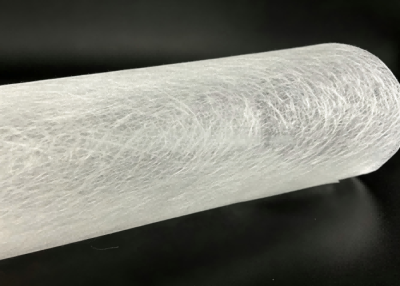
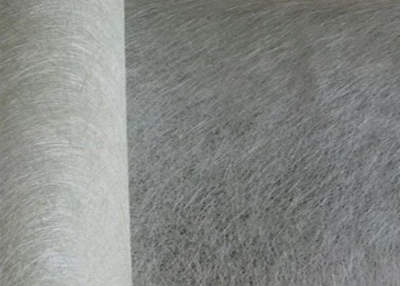
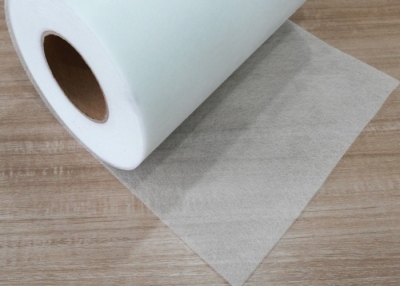
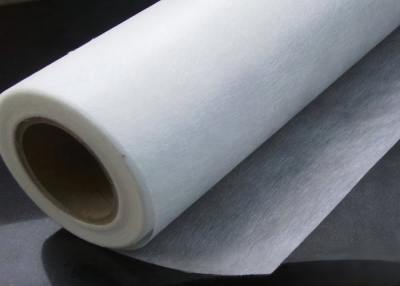
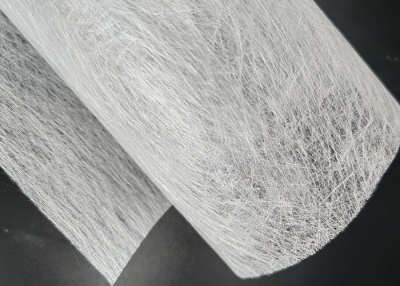
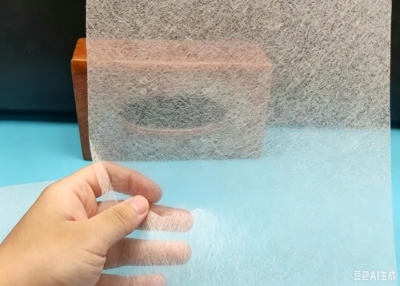
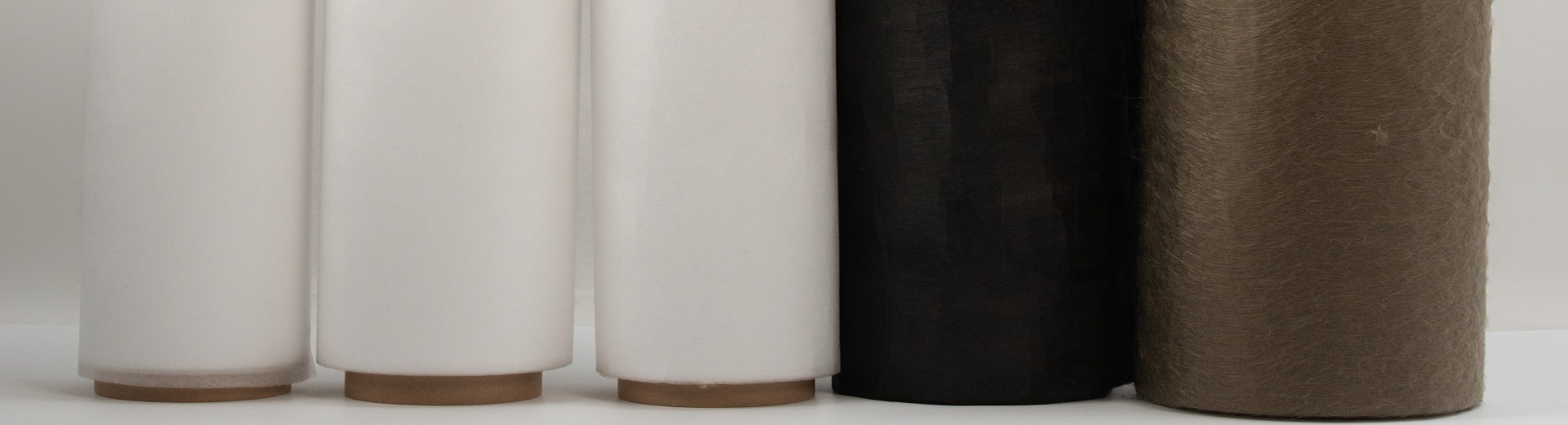
Carbon fiber wet-laid nonwoven fabric is a porous material made primarily from chopped carbon fibers that are uniformly dispersed in an aqueous medium and prepared through a wet-laid web formation process similar to papermaking. This process effectively solves the problem of fiber agglomeration and achieves three-dimensional uniform distribution of fibers.
Carbon fiber itself is a high-performance fiber material with a carbon content exceeding 90%, featuring high strength, high modulus, and corrosion resistance. Its tensile strength can reach over 3500 MPa, and its modulus ranges from 230 to 430 GPa. Based on this, a porous structure is constructed through a wet process, making the carbon fiber wet nonwoven fabric possess both structural strength and functional characteristics.
2. Key Technical Indicators
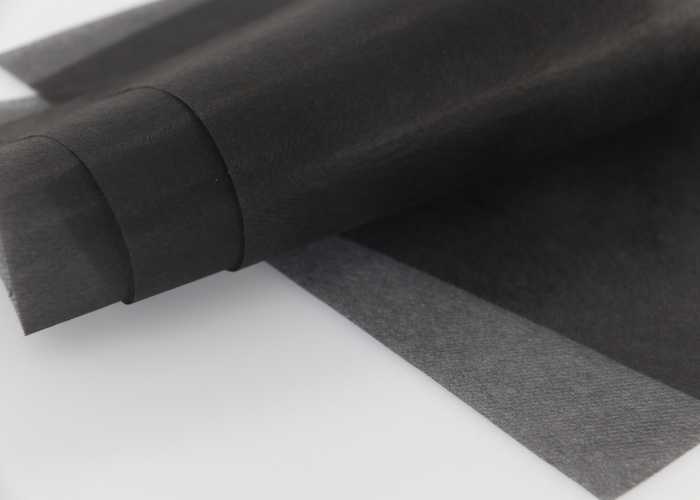
In high-end applications, one of the core technical indicators for carbon fiber wet-laid nonwovens is their volume fraction density (or solid content), which corresponds to a porosity level ranging from 92% to 97%. This specific structural configuration yields significant performance advantages:
High Porosity (80%–98%): Existing research indicates that the porosity of carbon fiber nonwovens can reach levels between 80% and 98%.
Lightweight Nature: Compared to traditional woven fabrics, the areal weight (basis weight) can be remarkably low, typically ranging from a few tens to a few hundred grams per square meter (g/m²).
High Specific Strength: The strength-to-weight ratio of carbon fiber can exceed that of steel by more than five times.
3. Core Advantages of Wet Process Technology
Compared to dry-laid nonwoven, carbon fiber wet-laid nonwoven has obvious technical advantages:
Better dispersibility: aqueous medium reduces the probability of fiber agglomeration
High structural uniformity: forming a stable three-dimensional network
Composite processability: Can be combined with resins and functional fillers
Furthermore, the wet-laid process allows for integration with slurry-based systems (such as wood pulp or synthetic fibers), thereby enhancing the material's mechanical strength and processability.
4. Industry Development Trends
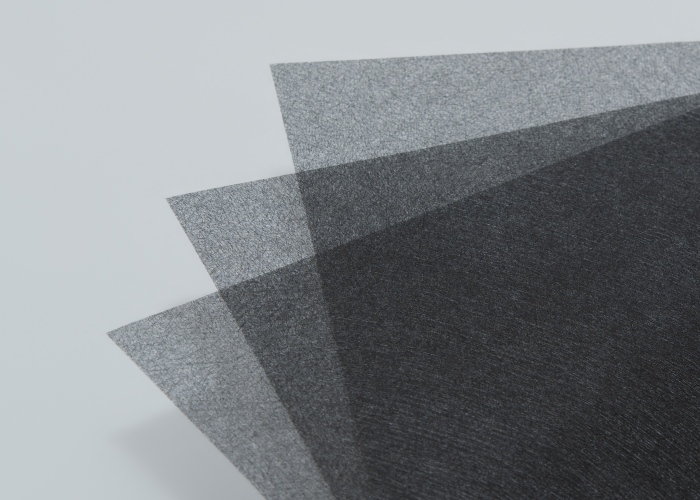
In the future, carbon fiber wet-laid nonwoven fabrics will develop along the following directions:
Functional integration: integration of conductivity, thermal conductivity, and filtration performance
Large-scale production: Reduce costs and increase market penetration
Green manufacturing: optimizing energy consumption and environmental protection indicators
Especially driven by the "dual carbon" goals, carbon fiber wet-laid nonwoven fabrics, as lightweight materials, will play a greater role in the fields of new energy and high-end manufacturing.
Related News
Read More >-
![70g/m² Heavy-Duty Non-Woven Glass Mat for Architectural Acoustic Panels, Mineral Wool Tiles, and Perforated Ceilings]()
70g/m² Heavy-Duty Non-Woven Glass Mat for Architectural Acoustic Panels, Mineral Wool Tiles, and Perforated Ceilings
SAAT70 is a wet-laid non-woven fiberglass acoustic tissue engineered for high-performance sound absorption panels and architectural acoustic ceilings. We manufacture this dense fiberglass tissue as a primary acoustic facing veil that controls airflow resistance (AFR) while masking dark mineral wool and glass wool fibers.
-
![25g/m² Ultra-Thin Non-Woven Glass Mat for Substrate Reinforcement in PVC Flooring and Decorative Wallpapers]()
25g/m² Ultra-Thin Non-Woven Glass Mat for Substrate Reinforcement in PVC Flooring and Decorative Wallpapers
The light 25g/m² matrix holds exact machine tension under high-temperature PVC gelation ovens up to 200°C. Factory lines integrate SAFT25 into vinyl sheet flooring and vinyl-faced wall coverings to prevent edge curling, thermal shrinkage, and surface tearing during high-speed lamination
-
![25g/m² Ultra-Thin Glass Fiber Mat for Organic Waste Gas Adsorption and Air Purification Substrates]()
25g/m² Ultra-Thin Glass Fiber Mat for Organic Waste Gas Adsorption and Air Purification Substrates
The light 25g/m² matrix maintains uniform air permeability while providing high thermal resistance up to 260°C. Factory lines integrate SAFT25 into pleated filter elements, honeycomb adsorption wheels, and industrial exhaust gas scrubbers to optimize gas capture without driving up system pressure drop
-
![50g/m² Non-Woven Glass Mat for Primary Backing and Dimensional Stability in Modular Carpet Tiles]()
50g/m² Non-Woven Glass Mat for Primary Backing and Dimensional Stability in Modular Carpet Tiles
The 50g/m² matrix holds tight web tension during high-temperature PVC paste coating and hot bitumen impregnation up to 180°C. Factory lines integrate SACT50 directly between secondary backing layers to stabilize modular tile geometry and eliminate field returns caused by dimensional shifting
-
![50g/m² Functional Coated Mat for Polyisocyanurate (PIR/PUR), Rock Wool, and EPS Outer Wall Insulation Boards.]()
50g/m² Functional Coated Mat for Polyisocyanurate (PIR/PUR), Rock Wool, and EPS Outer Wall Insulation Boards.
The 50g/m² matrix features a functional polymer coating that blocks foam chemical strike-through, maintains web tension under continuous heat pressing up to 200°C, and ensures superior mortar keying on job sites.
-
![30g/m² Fiberglass Tissue for Inner and Outer Surface Treatment of FRP Products]()
30g/m² Fiberglass Tissue for Inner and Outer Surface Treatment of FRP Products
We produce this Fiberglass Surface Tissue to form a resin-rich layer on the inner corrosion-resistant lining and outer surface of FRP tanks, pipes, and pultruded profiles, preventing resin cracking under thermal stress.
-
![SART50 Fiberglass Roofing Tissue to Reduce Asphalt Membrane Production Scrap]()
SART50 Fiberglass Roofing Tissue to Reduce Asphalt Membrane Production Scrap
We make this Fiberglass Tissue to carry asphalt during continuous hot dipping and lamination runs.The 50g/m² matrix holds roll tension under high temperatures, stops edge tears, and controls binder loss in hot bitumen dip tanks up to 200°C.
-
![The Industrial Value of Polyimide Wet-Laid Nonwovens]()
The Industrial Value of Polyimide Wet-Laid Nonwovens
Polyimide fiber wet-laid nonwoven fabric is the ideal fiber material for making fire-retardant clothing such as protective suits for armored forces, racing suits, and flight suits. It can also be used to manufacture comfortable and warm functional clothing.